Analyzing the Effects of Tiered Reward Systems on Player Retention in Mobile Poker Variants
Erik Otto · Aug 20, 2026

Analyzing the Effects of Tiered Reward Systems on Player Retention in Mobile Poker Variants
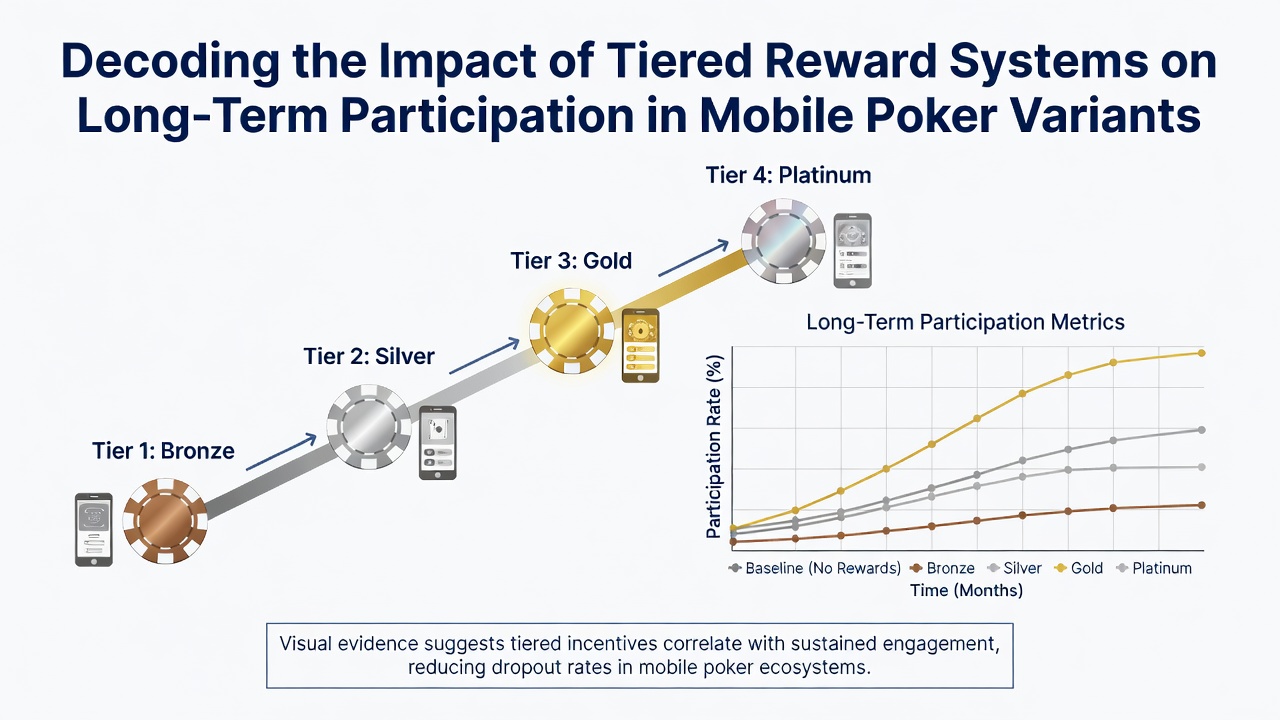
Researchers have tracked how tiered reward systems operate within mobile poker applications, where players advance through levels such as bronze, silver, gold, and platinum by accumulating points from hands played, tournaments entered, and daily logins completed. These structures deliver escalating benefits including cashback percentages, tournament ticket allocations, and exclusive table access that scale with each tier achieved, and data from multiple industry reports shows participation metrics shifting in measurable ways over extended periods.
Studies conducted across various platforms indicate that players who reach higher tiers tend to maintain consistent session lengths, while those remaining in entry levels display higher rates of account inactivity after initial months. According to findings released by the University of Nevada Las Vegas International Gaming Institute in early 2026, retention curves flatten noticeably once players cross into mid-tier status, with average monthly active days rising by measurable margins compared to non-tiered user groups.
Mechanics Behind Tier Progression and Mobile-Specific Features
Mobile poker variants incorporate accelerated point multipliers during peak hours alongside time-limited challenges that feed directly into tier calculations, and developers adjust these parameters based on aggregated user behavior logs collected from regions including North America and parts of Europe. Points typically expire after set intervals unless players maintain activity thresholds, which creates recurring engagement loops documented in platform analytics shared at industry conferences throughout 2025 and into August 2026.
Observers note that push notifications and in-app progress trackers play a central role in sustaining momentum toward the next tier, since real-time visibility into remaining requirements encourages additional hands or sit-and-go entries. Research from the Canadian Centre for Gaming Research highlights that variants such as fast-fold Texas Hold'em and pot-limit Omaha exhibit distinct progression speeds, with shorter decision windows allowing faster point accumulation and earlier tier advancement than traditional ring game formats.
Participation Patterns Across Different Player Segments
Long-term data sets reveal that recreational users who enter mid-tier levels within the first three months show sustained deposit frequency over subsequent quarters, whereas high-volume players already positioned in top tiers maintain steadier but less volatile activity graphs. Figures from academic analyses presented at the 2026 Gaming Analytics Summit demonstrate correlations between tier stability and reduced churn, particularly when reward redemptions align with personal play preferences rather than generic bonuses.
One longitudinal review of several thousand accounts found that players receiving personalized tier milestones, such as customized rake rebates or variant-specific leaderboards, logged higher total hands over twelve-month windows than those receiving standard offerings. External reports from the Australian Institute of Criminology further indicate that geographic differences influence these outcomes, with users in markets offering integrated digital wallets progressing through tiers at different paces due to transaction speed variations.
Comparative Outcomes in Tiered Versus Non-Tiered Environments
Platforms that introduced tiered systems after operating without them recorded shifts in average lifetime value metrics, and researchers attribute part of these changes to the psychological effect of visible progression markers rather than monetary value alone. A comparative study released by the European Gaming and Betting Association in mid-2026 compared two cohorts across matched mobile poker titles and identified elevated continuation rates among those exposed to tier visuals, although exact causation required additional controls for confounding variables such as game variant popularity.
Turns out that seasonal events tied to tier resets, common in August schedules when many apps launch summer promotions, temporarily boost participation before settling back into baseline patterns observed in prior years. Data indicates that players who lapse from higher tiers often cite perceived difficulty in maintaining status as a primary factor, while those who successfully defend their level through consistent play report extended overall platform tenure according to aggregated survey responses compiled by independent research groups.
Conclusion
Available evidence from multiple regulatory and academic sources demonstrates measurable associations between tiered reward structures and extended participation timelines in mobile poker environments, with progression mechanics and reward personalization emerging as consistent variables across examined data sets. Continued monitoring through 2026 and beyond will clarify how adjustments to these systems influence user behavior across evolving platform landscapes.