Behavioral Biometrics Strengthening Continuous Verification in Betting Applications
Erik Zimmermann · Jun 28, 2026

Behavioral Biometrics Strengthening Continuous Verification in Betting Applications
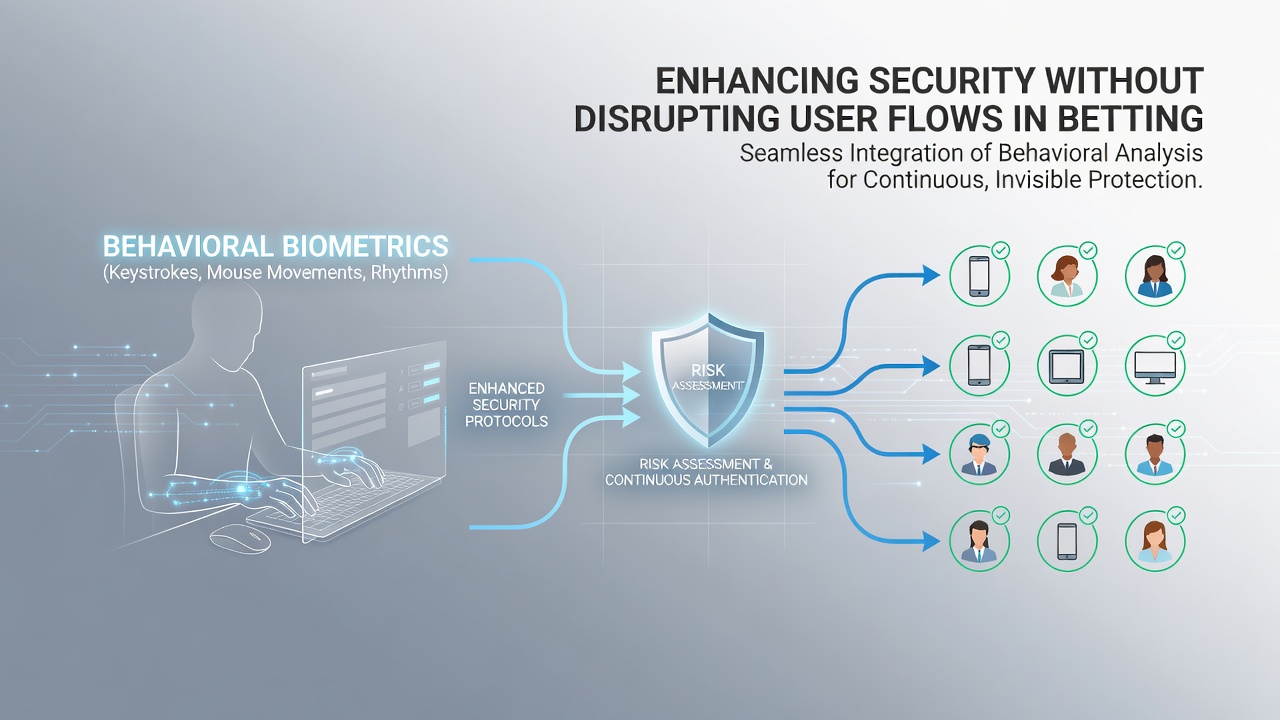
Behavioral biometrics analyze user interactions such as swipe velocity, typing cadence, device tilt angles and navigation sequences to create unique profiles that authenticate individuals throughout sessions in betting applications, and this approach operates without requiring additional inputs or interruptions to the betting process.
Systems collect data points passively from the moment a user opens an app, then compare live behavior against established baselines stored on secure servers, while deviations trigger risk assessments that may prompt further verification steps only when anomalies exceed predefined thresholds.
Core Mechanisms Driving Passive Authentication
Touchscreen pressure variations combined with finger movement trajectories form one layer of identification, and accelerometer readings capture how a person holds and moves their device during rapid bet placements or live event monitoring, whereas keyboard dynamics track dwell times between key presses on deposit or withdrawal forms.
Machine learning models process these signals in real time, updating profiles dynamically as habits evolve over weeks or months, and research from institutions like the University of Waterloo indicates that such models achieve high accuracy rates when trained on diverse user datasets collected across multiple device types.
Security Enhancements Without Workflow Interruptions
Account takeover attempts often fail because fraudsters replicate static credentials yet cannot mimic teh precise timing and pressure patterns of legitimate account holders, so platforms detect mismatches early and apply graduated responses ranging from silent monitoring to temporary transaction holds.
Users continue placing wagers, adjusting odds or exploring game libraries uninterrupted, since the verification layer runs entirely in the background and only surfaces when explicit confirmation becomes necessary according to risk algorithms.
Industry Adoption Patterns Observed Through Mid-2026
By June 2026 multiple operators across regulated markets had integrated these tools into core platforms, and reports from the National Institute of Standards and Technology highlight standardized testing frameworks that help developers measure false acceptance and rejection rates before deployment.
European operators following guidelines from bodies such as the Malta Gaming Authority adopted similar protocols earlier, whereas North American platforms focused on mobile-first implementations that align with existing payment and identity verification flows.
Data Integration With Existing Compliance Structures
Behavioral signals supplement rather than replace know-your-customer checks performed at registration, and they provide ongoing assurance that the same individual remains in control of the account during extended play periods or high-value transactions.
Operators combine these metrics with device fingerprinting and IP analysis to build layered defenses, yet the behavioral component adds resilience against sophisticated attacks that bypass traditional perimeter controls.
Technical Considerations for Implementation
Latency remains minimal because processing occurs on-device where possible before encrypted summaries reach central servers, and this design reduces bandwidth demands while preserving user privacy through selective data transmission.
Developers calibrate sensitivity settings according to regional regulatory requirements and user demographics, since older populations may exhibit different interaction speeds than younger users who navigate apps more rapidly.
Future Developments in Profile Stability
Longer-term studies examine how life events such as injury or changes in device usage affect profile consistency, and adaptive algorithms now incorporate gradual drift detection to maintain accuracy without forcing periodic re-enrollment.
Industry groups including the Gaming Laboratories International have begun evaluating standardized benchmarks for behavioral systems, which could streamline certification processes for new betting applications entering multiple jurisdictions simultaneously.
Conclusion
Behavioral biometrics deliver persistent verification that strengthens protection against unauthorized access while preserving the seamless experience users expect when engaging with betting platforms, and continued refinement of these methods supports both security objectives and operational efficiency across the sector.