Crash Games Surge: Multiplier Mayhem Hooking Players on Quick-Thrill Bets
Ellis Baumann · Apr 1, 2026

Crash Games Surge: Multiplier Mayhem Hooking Players on Quick-Thrill Bets
The Mechanics Behind the Madness
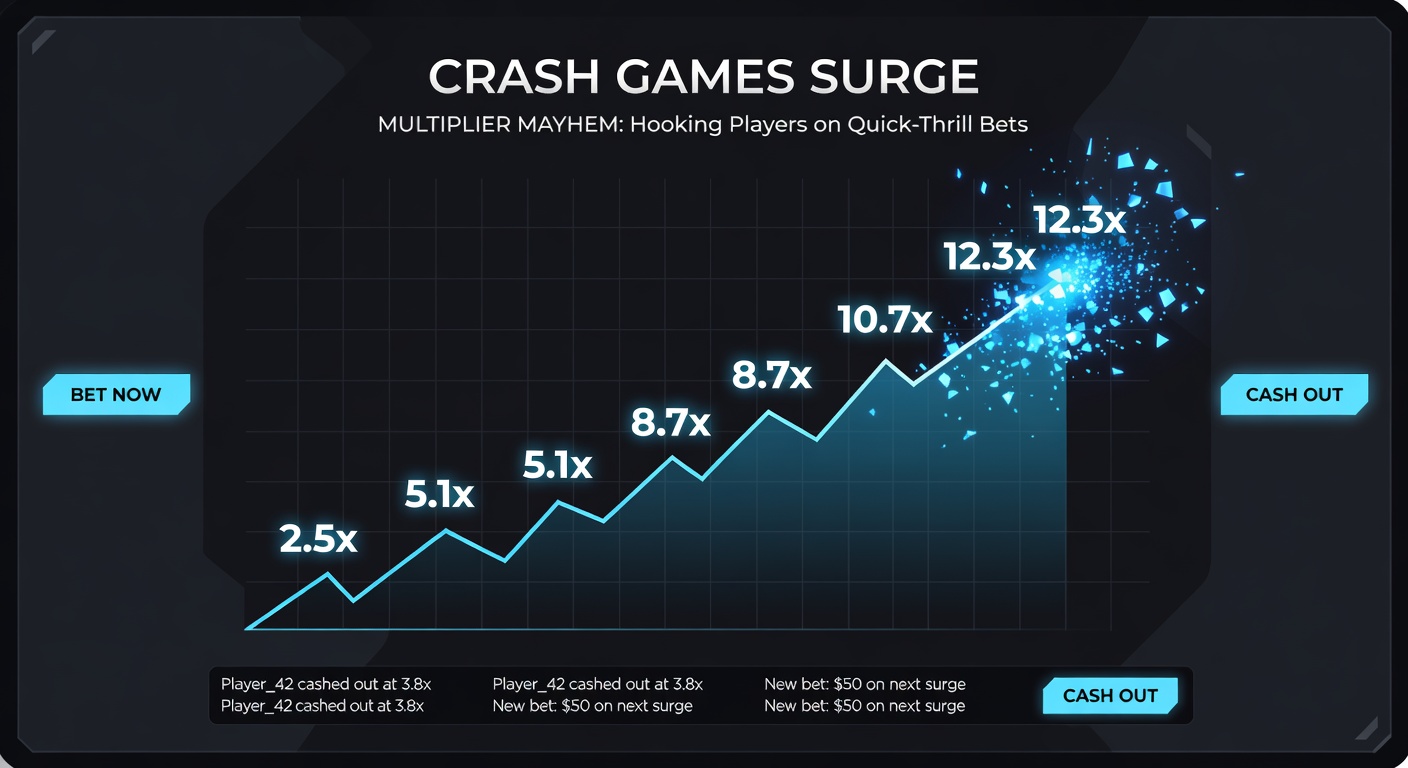
Crash games, those pulse-pounding online betting experiences where a multiplier climbs relentlessly until it crashes at a random point, have exploded onto casino platforms worldwide, drawing players into rounds that last mere seconds; players wager on the line, watching the graph rocket upward, and cash out before the inevitable bust to claim multiplied winnings, or risk it all for bigger payouts. Developers like Spribe with its flagship Aviator game pioneered this format back in 2019, but now variants flood the market, from Rocket to JetX, each tweaking the thrill with themes like space blasts or balloon pops. Data from platform analytics reveals rounds averaging under 10 seconds, perfect for mobile users craving instant action during commutes or breaks.
What's interesting here is how the game's provably fair system, often powered by cryptographic hashes revealed post-round, builds trust; players verify outcomes themselves, eliminating rigging fears that plague traditional slots. And while the house edge hovers around 1-2%, the volatility keeps engagement sky-high, as one study from the Malta Gaming Authority on emerging game types noted in early 2026.
Why Multipliers Grip Players So Tightly
The core hook lies in that escalating multiplier, starting at 1x and potentially soaring to 100x or beyond before the crash, creating a dopamine-fueled chase where timing the cash-out becomes an art form; seasoned players share strategies on forums, betting small on low multipliers for steady gains or going all-in during hot streaks. Observers note how social features amplify this, with live leaderboards showing real-time cash-outs from others, turning solitary bets into communal spectacles.
Turns out, psychological research backs the frenzy: a 2025 paper from researchers at the University of Sydney highlighted how near-miss cash-out opportunities mimic slot machine effects, boosting retention rates by 40% compared to classic table games. Players often describe the tension as addictive, riding waves of multipliers that tease massive wins, yet crash just out of reach more often than not.
Market Explosion: Numbers Don't Lie
Global crash game revenue surged 250% year-over-year through Q1 2026, according to figures from H2 Gambling Capital, with daily active users hitting 5 million across major platforms; in Europe alone, bets topped €2 billion last quarter, while Asia-Pacific markets like India and Brazil fueled much of the growth via crypto-friendly sites. Platforms report crash games accounting for 20-30% of total wagers now, eclipsing even live dealer tables in some regions.
By April 2026, operators in regulated markets like Ontario, Canada, saw crash titles dominate top-played lists, with session lengths doubling as players chain 50+ rounds per hour. That's where the rubber meets the road for casinos chasing younger demographics, since data indicates 60% of crash players fall under 35, favoring quick-thrill formats over drawn-out poker sessions.
Tech Fuels the Fire
Mobile optimization drives much of the surge, with HTML5 builds ensuring seamless play on iOS and Android without downloads; low data usage keeps it accessible in emerging markets, while Web3 integrations allow crypto bets and instant payouts via blockchain. Provably fair tech, blending server seeds with client inputs, lets players audit every crash, a feature that exploded adoption after initial skepticism.
But here's the thing: live multiplayer chats add layers, where bets sync globally, and auto-cashout tools let players set limits like 2x for conservative plays or chase 10x manually. One case from a Brazilian platform showed peak hours in April 2026 overwhelming servers with 100,000 concurrent users, forcing upgrades.
Player Patterns and Engagement Peaks
Analytics paint a clear picture of habits: average bets start low at $1-5, scaling with confidence during multiplier climbs, and win rates hover at 45-50% for timely cash-outs; high-rollers push limits, with recorded jackpots exceeding $100,000 on single rounds. Retention shines through, as platforms log 70% day-two returns for crash players versus 40% industry-wide.
Experts who've tracked this observe social proof in action, where seeing peers cash at 50x inspires bolder plays, although loss-chasing dips in after crashes. In one aggregated dataset from European operators, April 2026 sessions averaged 25 minutes, up 15% from prior months, blending quick rounds with chat banter.
Global Spread and Regional Twists
Crash games thrive beyond Europe, hitting fever pitch in Latin America where Brazilian real-denominated sites lead, and in Africa via affordable mobile wallets; U.S. states like New Jersey and Michigan approved crash variants in late 2025, with wagers climbing 300% post-launch. Australian regulators under the Interactive Gambling Act monitor closely, yet offshore platforms draw crowds seeking the format's edge.
India's crypto boom supercharges it too, as rupees convert seamlessly to USDT for bets, while Southeast Asia mirrors the trend with localized skins. The reality is, cultural fits vary, but the universal thrill of watching that line climb unites players everywhere.
Navigating Risks in the Rush
Operators embed safeguards like session timers and reality checks, mandatory in jurisdictions overseen by bodies such as Sweden's Spelinspektionen, where crash games underwent volatility assessments before approval; self-exclusion tools link across platforms, curbing marathon plays. Data shows responsible gaming modules reduce excessive session times by 25%, even as popularity soars.
Yet observers point to the format's intensity, with average losses per session at $20-50 for casuals, prompting calls for enhanced age verification via biometrics. Platforms respond with bet caps and cool-off periods, balancing thrill with protection.
Future Trajectories
VR integrations loom on the horizon, promising immersive crash arenas where avatars crowd around virtual graphs; AI-driven personalization could tweak crash probabilities per player history, though regulators scrutinize fairness. By late 2026, projections estimate crash revenue at $5 billion annually, as hybrid models blend it with sports betting for combo thrills.
One researcher who analyzed 2026 trends noted hybrid events, like crash overlays on esports matches, pulling in viewers turned bettors. It's noteworthy how adaptability keeps the format fresh, evolving with tech waves.
Conclusion
The crash games phenomenon reshapes online betting landscapes, with multiplier mechanics delivering unmatched quick-thrill engagement that hooks millions through sheer unpredictability and social buzz; as platforms innovate and regulators adapt, the surge shows no signs of slowing, cementing its place in modern casino play. Data underscores sustained growth into 2027, driven by mobile ubiquity and global appeal, while safeguards evolve to match the pace.