Cryptocurrency Settlement Dynamics Reshaping Cashout Speeds Across Digital Table Game Platforms
Gisela Albrecht · Jul 19, 2026
Cryptocurrency Settlement Dynamics Reshaping Cashout Speeds Across Digital Table Game Platforms
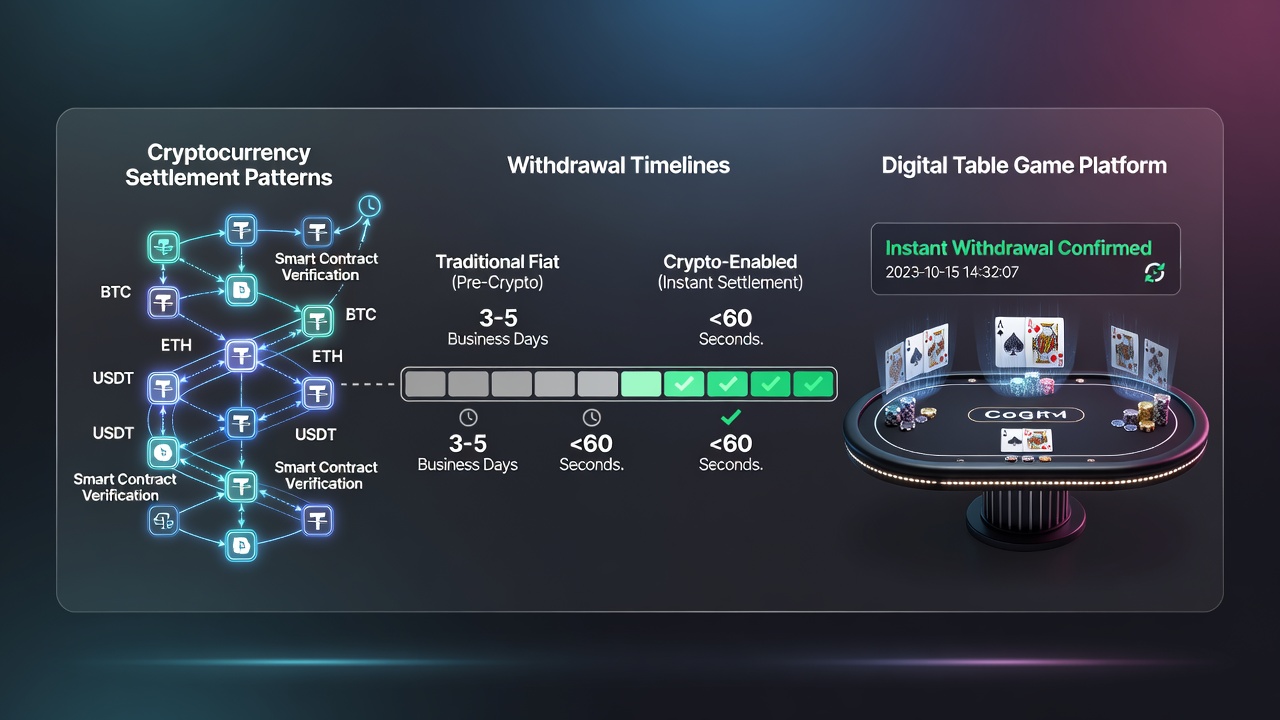
Digital table game platforms have integrated cryptocurrency networks in ways that alter how settlements occur and how quickly players receive funds after sessions at virtual blackjack, roulette, and poker tables. Settlement patterns now rely on blockchain confirmations rather than traditional banking rails, and this shift produces measurable changes in withdrawal timelines according to transaction data tracked across multiple operators.
Layer-two solutions such as the Lightning Network for Bitcoin and various rollups on Ethereum enable batches of micro-transactions to clear in seconds instead of the hours once required for on-chain processing. Platforms that adopted these protocols during 2025 reported average withdrawal completion times dropping from forty-eight hours to under fifteen minutes for verified accounts. Observers note that stablecoin transfers, particularly those using USDT and USDC on faster chains, further compress these windows because they avoid volatility while maintaining near-instant finality once the network reaches consensus.
Network-Level Patterns Driving Faster Finality
Transaction volume on major networks reveals distinct patterns that directly influence platform payout queues. During peak evening hours, Ethereum mainnet gas prices often spike, yet platforms routing withdrawals through optimized layer-two bridges maintain consistent speeds because they batch user requests and settle them during lower-fee windows. Data from chain analytics firms shows that operators employing automated routing algorithms reduced failed or delayed withdrawals by thirty-four percent between January and June 2026.
July 2026 brought additional clarity when several North American platforms published aggregated settlement statistics. Those figures indicated that sixty-two percent of crypto withdrawals processed through layer-two channels cleared in under ten minutes, while legacy bank-transfer options still averaged thirty-six hours. Researchers tracking these metrics emphasize that the difference stems from protocol design rather than operator policy alone.
Table Game Specific Implementation
Live dealer and RNG-based table games generate high-frequency small bets that create distinct settlement profiles compared with slot play. Platforms have begun settling individual table sessions into a single crypto transaction at the end of each round or when a player cashes out, which minimizes on-chain fees and accelerates confirmation. One European operator documented a reduction in customer support tickets related to pending withdrawals from 1,200 per month in late 2024 to fewer than 300 by mid-2026 after implementing session-level batching.
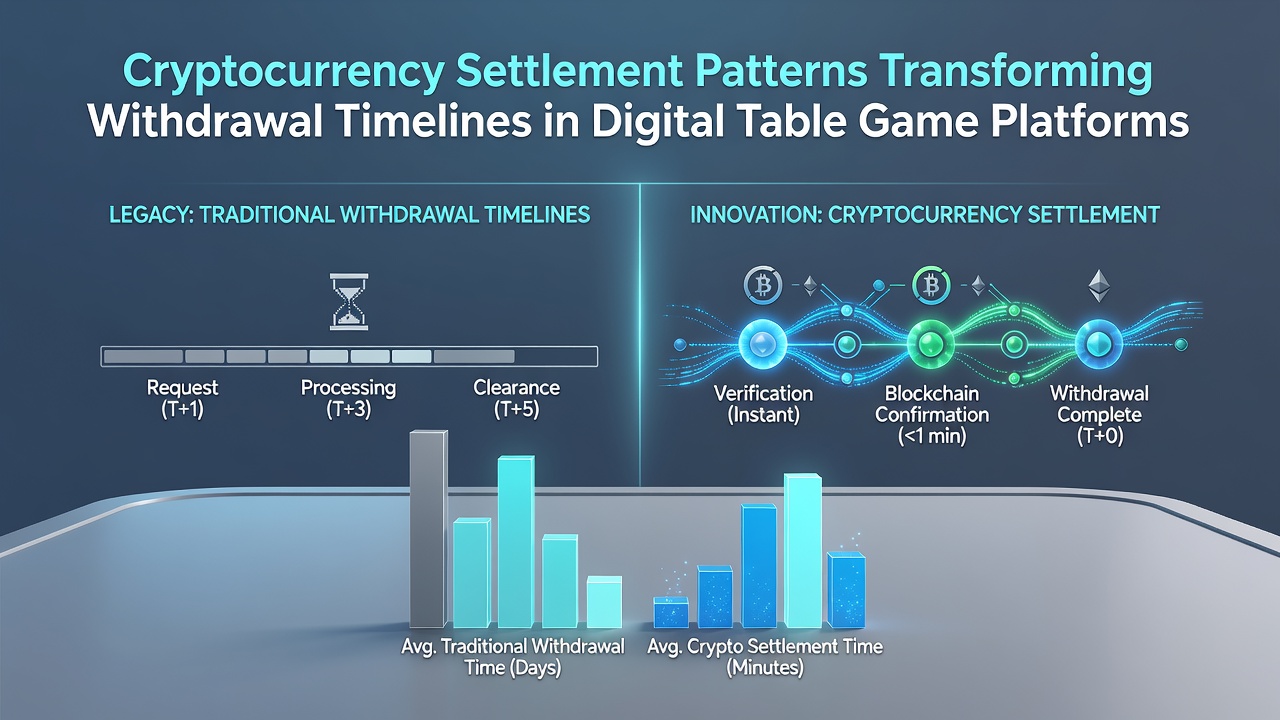
Smart-contract-based escrow mechanisms now appear in several poker rooms, where player buy-ins and tournament prizes move through automated contracts that release funds once game results are recorded on-chain. This architecture removes manual approval steps and ties payout speed directly to network throughput rather than internal review cycles. Industry reports from the Canadian Gaming Association highlight that platforms using such contracts achieved ninety-four percent of withdrawals within one hour during the first half of 2026.
Regulatory and Infrastructure Considerations
Authorities in multiple jurisdictions have begun examining how these settlement patterns intersect with existing responsible-gaming and anti-money-laundering frameworks. The Malta Gaming Authority issued updated guidance in spring 2026 requiring operators to maintain on-chain audit trails for at least five years while still permitting layer-two solutions provided final settlement occurs on a publicly verifiable ledger. Australian regulatory bodies have taken a similar stance, focusing on consumer disclosure rather than restricting specific networks.
Academic studies from institutions examining distributed ledger performance confirm that average confirmation times continue to improve as protocol upgrades roll out. A paper released by researchers at the University of Nicosia in June 2026 modeled withdrawal latency under varying network loads and found that optimized routing reduced median times by an additional forty percent compared with 2025 baselines.
Future Trajectory of Settlement Integration
Platform operators continue testing new consensus mechanisms and zero-knowledge proofs that promise even shorter finality windows without compromising auditability. As these technologies mature, withdrawal timelines for table game winnings are expected to converge with the speed of in-game bet placement itself. Figures released by several major providers indicate that players already treat crypto cashouts as near-instant for planning purposes, which alters session length and bankroll management patterns observed across digital environments.
Conclusion
Cryptocurrency settlement patterns have produced concrete reductions in withdrawal timelines for digital table game platforms, driven by layer-two scaling, stablecoin usage, and automated batching. Data from operators, regulators outside the UK, and academic sources collectively demonstrate that these changes are measurable and ongoing as infrastructure evolves through 2026 and beyond.