Free Bet Flips Demystified: Matched Betting's Risk-Free Path to Turning Promotions into Profits
Gisela Albrecht · Apr 3, 2026

Free Bet Flips Demystified: Matched Betting's Risk-Free Path to Turning Promotions into Profits
The Basics of Matched Betting and Why It Works
Matched betting emerged as a technique that leverages bookmaker promotions, particularly free bets, to generate returns without exposure to gambling risk; those familiar with the method place qualifying bets on all possible outcomes of an event, ensuring a small loss on the initial wager that's offset by the profit from the subsequent free bet. Data from industry trackers shows users extracting up to 70-80% of a free bet's value as cash, turning what was once promotional bait into reliable income streams, and that's before considering the volume of offers available across sportsbooks.
Bookmakers offer free bets to attract new customers or reward loyalty, yet matched bettors flip the script by covering every outcome—backing a team to win via one site while laying the same outcome on a betting exchange like Betfair or Smarkets, where users bet against the result. This back-and-lay combo neutralizes chance, leaving only the free bet's stake as profit; experts who've analyzed thousands of offers note how simple arithmetic underpins it all, with qualifiers often qualifying for £10-£50 free bets after minimal outlay.
And here's where it gets straightforward: a typical £30 free bet might yield £24-£26 in withdrawable cash after accounting for exchange commissions, which hover around 2-5%; repeat this across multiple sites, and monthly returns climb into four figures for dedicated users, although beginners start smaller to build confidence.
Free Bet Flips Step by Step: From Promo to Payout
Users spot a free bet offer—say, "Bet £10, Get £30 Free"—and begin by placing a qualifying bet on an event with close odds, like a football match where both teams sit at 2.0 (even money); they back Manchester United to win at the bookmaker for £10, then lay the same outcome on an exchange for £10.20 to account for overround, resulting in a near-zero loss of pennies. Once the free bet credits, they repeat the process, but this time the free bet stake vanishes on loss, handing pure profit on the winning lay.
What's interesting is the precision tools make this seamless; software scans for the closest "match" between back odds and lay odds, qualifying bets in seconds rather than hours of manual hunting, and qualifiers often double as flip opportunities if odds align perfectly. Take a recent April 2026 promo from a major sportsbook tied to the Cheltenham Festival aftermath—users flipped £50 free bets into £40 profits each, stacking multiples as horse racing transitions into summer cricket offers.
Yet precision matters because odds drift; bettors lock in matches above 98% efficiency to minimize "qualifying losses," which rarely exceed £1 per offer, and exchanges provide liquidity for popular markets, ensuring lays fill instantly during peak times like Premier League weekends.
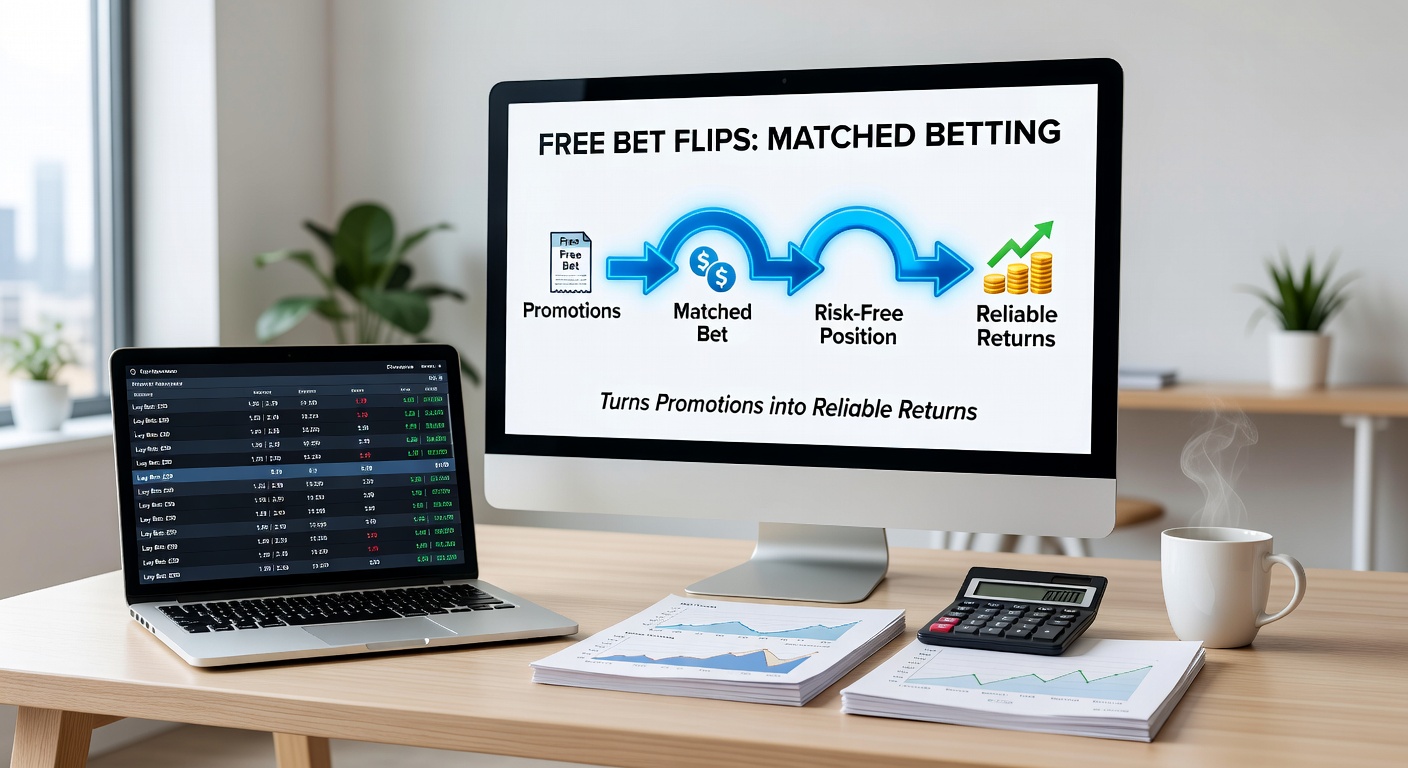
Tools, Trackers, and the Tech Powering Reliable Returns
Matched betting thrives on software like OddsMonkey or Team Profit, platforms that aggregate odds from 50+ bookies and exchanges in real-time, highlighting flips with one-click calculators showing exact stakes and projected profits; these tools evolved from spreadsheets in the early 2010s to AI-driven scanners by 2026, adapting to regulatory tweaks and new promo formats. Figures from user communities reveal average monthly profits of £500-£1,000 for part-timers using such services, scaling to £3,000+ for full-timers who reload accounts across borders.
But here's the thing: free trials hook newcomers, yet paid memberships—around £20/month—pay for themselves after a handful of offers, and communities share "mug bets" (low-risk qualifiers to stay under radar) alongside advanced strategies like casino offers or bingo flips. Observers note how April 2026 saw a surge in tennis Grand Slam tie-in promos, with software flagging 200+ opportunities weekly as bookies compete post-winter slowdowns.
Exchanges play a pivotal role too; Smarkets' low 2% commission edges out Betfair's tiered rates, drawing volume players who recycle profits into higher-volume markets, and integration APIs let software automate much of the grunt work, although human oversight catches edge cases like suspended markets.
Navigating Risks, Rules, and Global Variations
While matched betting sidesteps gambling risk, bookies impose terms like wagering requirements or stake limits, prompting users to space bets and vary selections to avoid "gubbing"—account restrictions for consistent winners; data indicates 20-30% of heavy users face limits after £5,000-£10,000 profit, shifting them to "float management" across family accounts or international sites. Legality varies: in Australia, the Australian Communications and Media Authority views it as skill-based, not chance, allowing open practice since exchanges launched Down Under.
Across the pond, U.S. states like New Jersey embrace similar mechanics via regulated apps, where promo hunters flip risk-free bets amid DraftKings and FanDuel wars; a 2025 report from the American Gaming Association highlighted $2.5 billion in U.S. bonuses flipped into player funds, underscoring how operators budget these as marketing costs. Europe sees Malta's MGA-licensed sites offering flips without issue, although some impose KYC hurdles; users mitigate by verifying early and documenting everything for disputes.
Tax implications surface too—in the UK, winnings stay tax-free as gambling proceeds, but Aussies report via ATO if trading volumes mimic business income; those who've scaled operations often consult pros, keeping flips recreational to dodge scrutiny.
Real-World Examples and 2026 Trends Fueling the Flip Frenzy
One tracker user in early 2026 documented £8,200 from 150 offers over three months, starting with sign-ups and rolling into reloads like "Bet £20 on Accumulators, Get £40," each flipped via Premier League qualifiers; another case involved a family duo clearing £15k annually by dividing bookie portfolios, dodging gubs through low-stake mugging. April 2026 brought fresh waves—Euro qualifiers sparked £100 risk-free bets, while NBA playoffs yielded U.S.-style boosts flipped on exchanges.
Trends point to hybrid offers blending sports and casino, where free spins convert to cash via low-house-edge games like blackjack; software now flags these at 80%+ extraction rates, and with 5G speeding mobile access, bettors flip on-the-go during commutes. Communities buzz about "ninja" strategies—subtle play to extend accounts—while AI predictors forecast odds shifts, boosting efficiency by 10-15%.
So as summer festivals loom, expect cricket and golf promos to dominate, with bookies upping stakes to £200 amid competition; those plugged into trackers already eye £50k yearly potentials, provided they rotate sites and stay disciplined.
Conclusion
Matched betting transforms free bet promotions into a methodical profit engine, harnessing back-lay symmetry and software smarts to deliver consistent, low-risk returns; from novice qualifiers to pro-level flips, the data underscores its viability, with global users pocketing millions annually despite evolving hurdles. As April 2026 promos heat up, trackers light the way for anyone willing to crunch the numbers, proving promotions needn't be one-sided gambles but flips toward financial upside.