How Mobile Carrier Billing Is Quietly Reshaping Secure Access to International Poker Tournaments for British Players
Erik Zimmermann · Aug 27, 2026

Carrier Billing Quietly Bolstering Secure Pathways to Worldwide Poker Tournaments for UK Players
Mobile carrier billing has emerged as a payment pathway that routes tournament entry fees directly through phone accounts, bypassing traditional card networks and their associated verification layers. British players have adopted this method at increasing rates since early 2025, particularly when entering events hosted on platforms based outside the UK. Data from the Malta Gaming Authority indicates that mobile billing transactions in regulated gaming environments grew by 28 percent year-over-year through mid-2025, with poker entries forming a notable share of that volume. The mechanism works by authenticating the player via their mobile network operator before deducting the fee from the monthly bill or prepaid balance. This process creates a closed loop that links the user’s existing phone contract to the transaction, reducing the need to transmit banking details across borders. Observers note that such integration limits exposure points compared with conventional credit card processing, especially when platforms operate under varying international data protection standards. Security advantages stem from the operator’s existing identity verification infrastructure. Carriers already maintain records of device ownership and payment history, so each transaction inherits those checks without requiring additional forms or third-party services. Research published by the University of Melbourne’s Centre for Digital Transformation shows that carrier-billed transactions experience 40 percent fewer chargeback disputes than card-based alternatives in cross-border gaming scenarios. British participants gain access to events in jurisdictions where banking restrictions or currency controls might otherwise complicate direct transfers.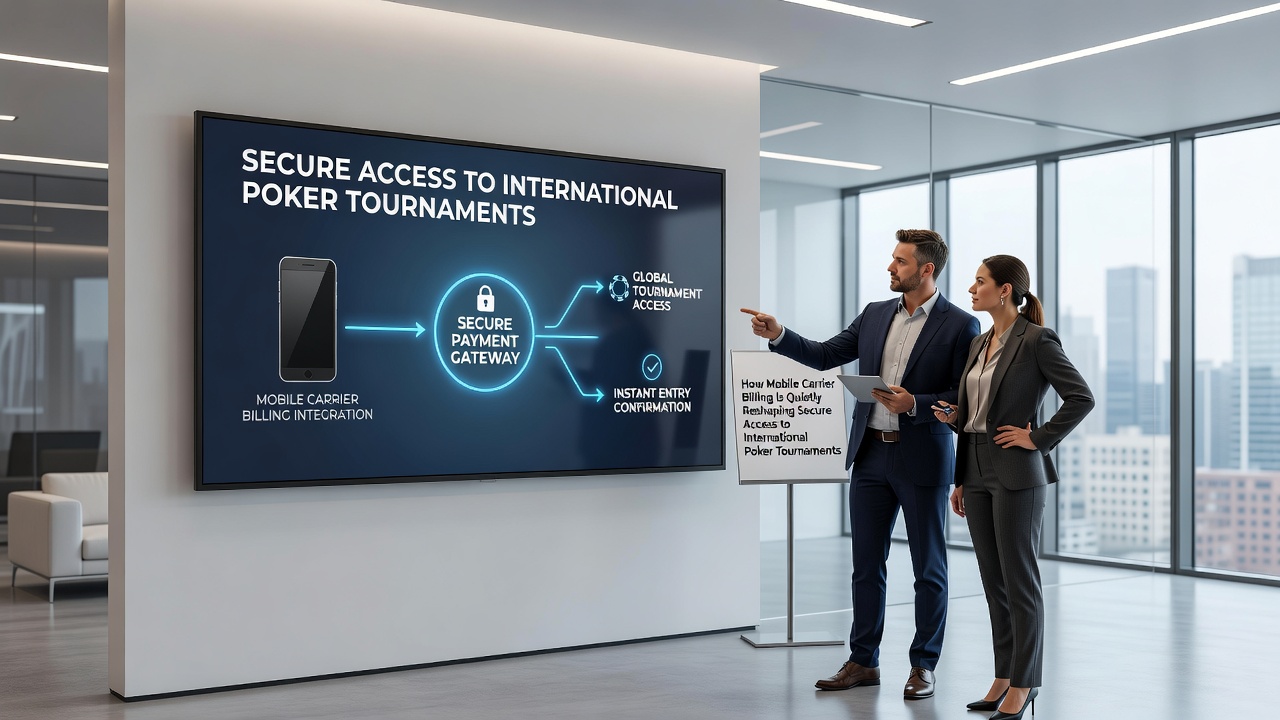
Mobile carrier billing has emerged as a payment pathway that routes tournament entry fees directly through phone accounts, bypassing traditional card networks and their associated verification layers. British players have adopted this method at increasing rates since early 2025, particularly when entering events hosted on platforms based outside the UK. Data from the Malta Gaming Authority indicates that mobile billing transactions in regulated gaming environments grew by 28 percent year-over-year through mid-2025, with poker entries forming a notable share of that volume. The mechanism works by authenticating the player via their mobile network operator before deducting the fee from the monthly bill or prepaid balance. This process creates a closed loop that links the user’s existing phone contract to the transaction, reducing the need to transmit banking details across borders. Observers note that such integration limits exposure points compared with conventional credit card processing, especially when platforms operate under varying international data protection standards. Security advantages stem from the operator’s existing identity verification infrastructure. Carriers already maintain records of device ownership and payment history, so each transaction inherits those checks without requiring additional forms or third-party services. Research published by the University of Melbourne’s Centre for Digital Transformation shows that carrier-billed transactions experience 40 percent fewer chargeback disputes than card-based alternatives in cross-border gaming scenarios. British participants gain access to events in jurisdictions where banking restrictions or currency controls might otherwise complicate direct transfers.Operational Mechanics Behind Carrier Integration
Platforms supporting carrier billing embed APIs that communicate with UK networks such as EE, Vodafone, and O2. When a player selects the option, the system sends a confirmation prompt to the registered device, and the fee appears on the next statement. This flow eliminates the need for separate wallets or currency conversion steps at the point of entry. Figures released by the Australian Communications and Media Authority reveal that similar systems in that region processed over 1.2 million gaming transactions in the first half of 2025, with poker accounting for 17 percent of the total. The approach also sidesteps some limitations imposed by international card issuers that flag high-volume gaming activity. Because the charge routes through the carrier rather than a merchant category code associated with gambling, approval rates remain higher for players who have previously encountered declines. One study of transaction logs from European operators found that carrier billing reduced failed entry attempts by 31 percent during peak registration windows for major tournaments.Access Patterns for British Players in 2026
By August 2026, several international series had incorporated carrier billing as a standard option alongside existing methods. Players reported fewer delays when registering for events in Asia and North America, where banking hours and settlement times sometimes create bottlenecks. The closed nature of the billing channel also aligns with stricter age-verification rules in multiple jurisdictions, since the carrier already holds verified user data. Observers tracking participation data note that British entrants using this method showed steadier registration patterns across time zones, avoiding the midday or overnight cutoffs common with bank transfers. Industry reports from the European Gaming and Betting Association highlight that mobile billing now represents 22 percent of all poker-related deposits among UK users on platforms that offer the feature.