Loyalty Structures and Retention Patterns in Regulated Digital Poker Platforms
Gisela Albrecht · Aug 9, 2026

Loyalty Structures and Retention Patterns in Regulated Digital Poker Platforms
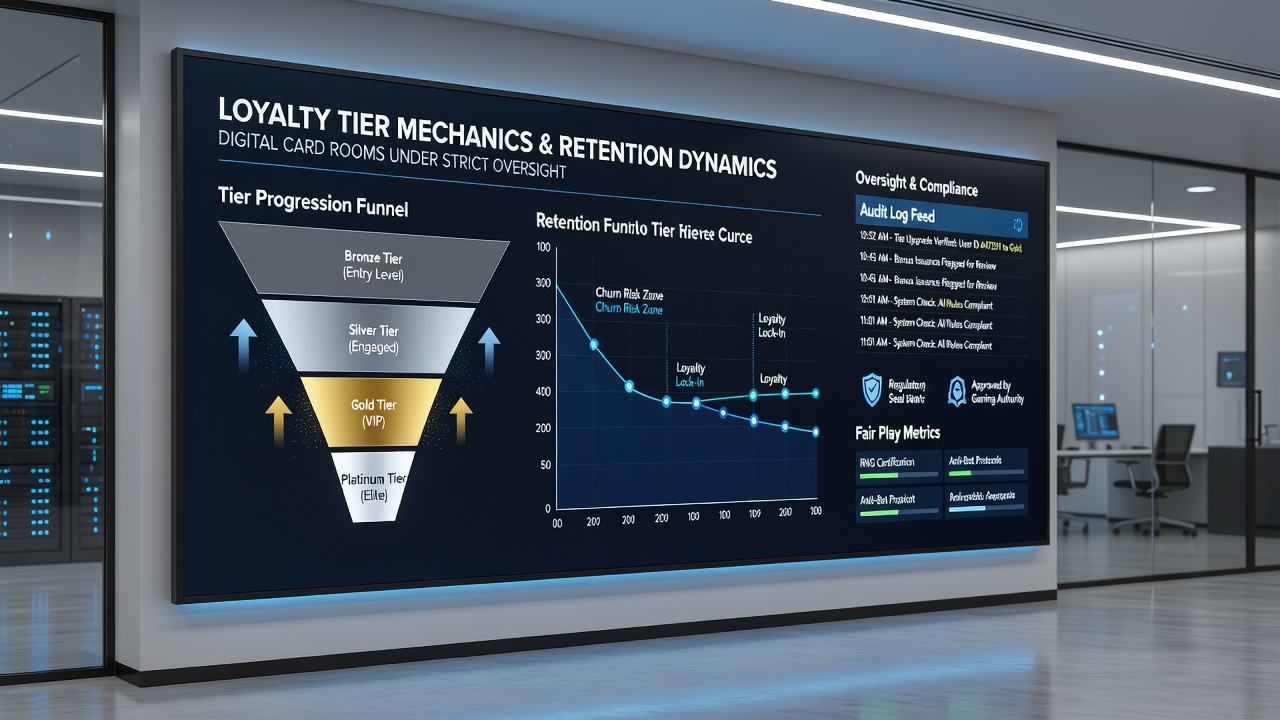
Digital card rooms operating under strict regulatory frameworks have developed sophisticated loyalty tier systems that track player activity through accumulated points based on rake contributions and session volume, while retention dynamics emerge from the structured progression through bronze, silver, gold, and platinum levels that unlock escalating benefits such as enhanced cashback percentages, priority tournament entries, and exclusive event access.
Core Mechanics of Tier Progression
Operators calculate tier advancement using algorithms that convert rake generated into loyalty points at fixed ratios, often awarding one point per dollar contributed, and these points reset or carry over depending on the quarterly or annual cycle established by each platform's compliance protocols. Players advance when they reach cumulative thresholds, for instance moving from silver to gold after generating 5,000 points within a tracking period, and this structure creates predictable pathways that encourage consistent participation without violating advertising standards set by oversight bodies.
Research from the University of Nevada's International Gaming Institute reveals that tiered models maintain player engagement across multiple jurisdictions because the visible progress bars and milestone notifications reinforce continued activity through visual feedback loops. Regulated environments in states like New Jersey and Pennsylvania require transparent disclosure of point values and redemption rates, which prevents the opacity that could trigger enforcement actions from gaming control boards.
Retention Dynamics Across Oversight Regimes
Retention rates improve when loyalty benefits align with player behavior patterns, such as offering free-to-play qualifiers for major tournaments that retain mid-tier participants who might otherwise migrate to unregulated sites. Data compiled by the Canadian Centre for Gaming Research shows retention increases of 18 to 22 percent among players who reach gold status within the first six months of enrollment, while platinum members exhibit churn rates below 12 percent annually due to personalized concierge services and higher cashback tiers that offset variance in poker outcomes.
Platforms must balance reward generosity against regulatory caps on player incentives, which means operators in Australia and parts of Europe structure their programs around non-cash perks like merchandise or educational content rather than direct monetary returns. This approach satisfies stricter advertising rules while still delivering perceived value that sustains long-term engagement.
Regulatory Constraints Shaping Program Design
Strict oversight requires that loyalty mechanics undergo regular audits to confirm fair point allocation and prevent manipulation that could disadvantage certain player segments, and auditors examine the underlying algorithms for bias in tier advancement speed across different stake levels. In August 2026 several North American regulators introduced updated guidelines requiring platforms to publish annual reports on loyalty program participation rates and average benefit redemption, which has led operators to refine their tracking systems for greater granularity.
Observers note that these reporting obligations have prompted card rooms to integrate retention analytics directly into compliance dashboards, allowing real-time monitoring of whether tier benefits correlate with reduced problem gambling indicators flagged by responsible gaming tools. The result has been a shift toward reward structures that emphasize skill development and community events over pure volume incentives.
Comparative Approaches in Different Markets
European platforms regulated under varying national frameworks tend to emphasize experiential rewards such as live event packages, whereas North American sites focus more on cash-equivalent credits that players can apply across multiple game types. Both models demonstrate measurable retention lifts, yet the specific mechanics adapt to local rules governing bonus structures and player fund segregation.
Industry reports from the Australasian Gaming Council indicate that hybrid programs combining tier progression with seasonal challenges produce stronger retention curves than static point systems alone, because the added layer of time-limited objectives maintains engagement momentum between tier milestones. Platforms that fail to refresh their offerings risk plateauing retention gains once players exhaust the novelty of initial tier climbs.
Conclusion
Loyalty tier mechanics in strictly overseen digital card rooms function as structured retention engines that convert consistent play into escalating benefits while remaining subject to transparency mandates and periodic audits. Retention dynamics strengthen when programs incorporate regulatory feedback loops and diversify rewards beyond cash equivalents, allowing operators across multiple jurisdictions to sustain player bases without compromising compliance standards. The interplay between tier progression thresholds, redemption structures, and oversight requirements continues to evolve as regulators refine reporting expectations and platforms refine their analytics capabilities.