The Ledger Effect Spurs Evolution in Virtual Betting Banking Practices
Erik Zimmermann · Jun 4, 2026
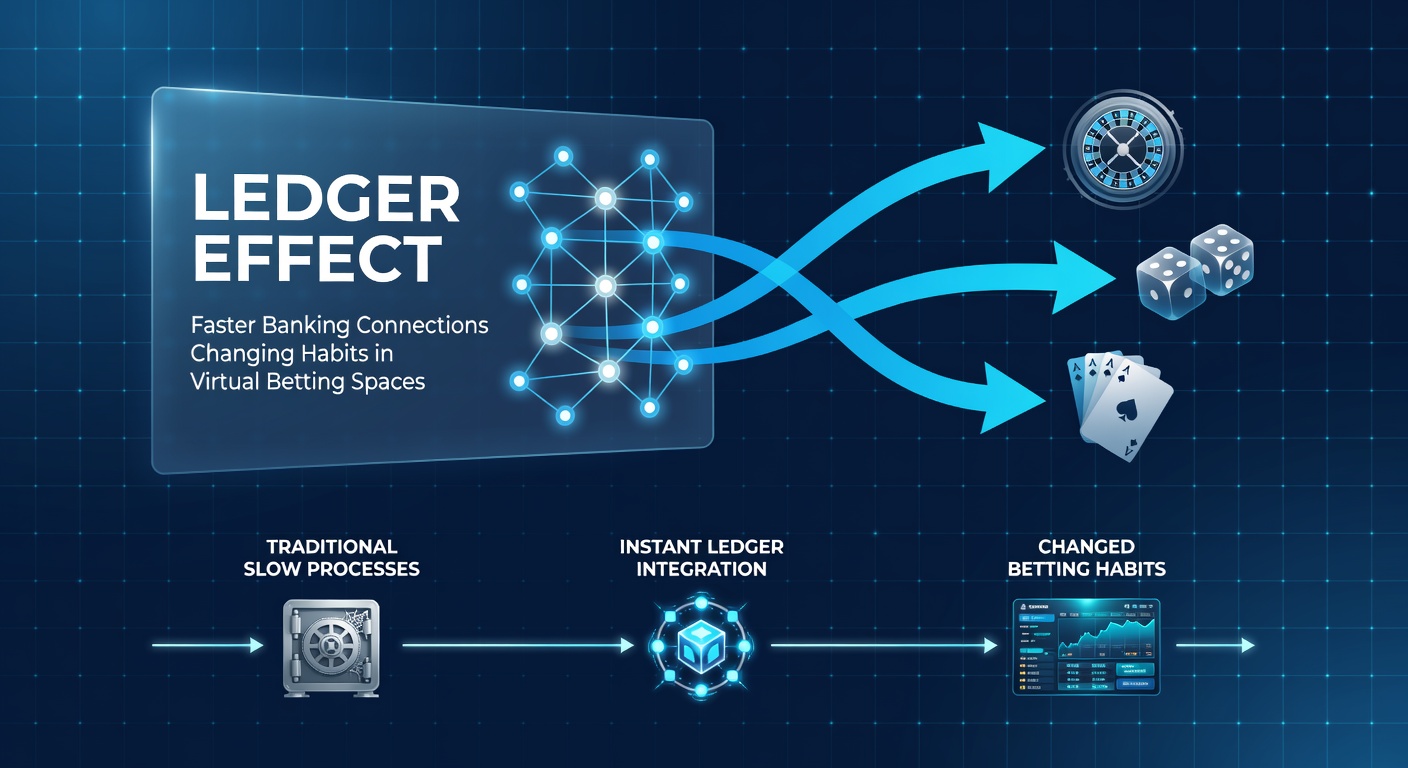
The Ledger Effect Spurs Evolution in Virtual Betting Banking Practices
Financial technology advances have produced what observers call the ledger effect, where streamlined banking connections enable near-instant transfers between user accounts and betting platforms, and this development has coincided with measurable shifts in how participants manage their wagering activities across digital spaces.
Payment rails such as open banking APIs and distributed ledger systems now process deposits in seconds rather than the hours or days once required by traditional bank wires, while withdrawal requests reach player accounts with similar speed, and regulators in multiple jurisdictions have documented corresponding changes in session frequency and transaction sizes since these tools gained wider adoption.
Mechanics Behind the Ledger Effect
Traditional banking transfers relied on batch processing cycles that cleared overnight or across multiple business days, yet newer connections bypass those delays through direct application programming interfaces that link bank ledgers to operator systems in real time, and industry reports indicate that platforms integrating these rails saw deposit completion rates climb above 95 percent within the first year of rollout.
Distributed ledger technology adds another layer by recording each movement on a shared, immutable chain that reduces reconciliation errors and allows operators to confirm funds without waiting for intermediary banks to verify the transaction, while this infrastructure supports both fiat and tokenized assets depending on the jurisdiction.
Observed Changes in Player Transaction Patterns
Data compiled by payment service providers shows that average deposit amounts have declined in markets where instant connections predominate, because players no longer need to move larger sums in anticipation of processing delays, and instead transfer smaller increments as needed during a session.
Session lengths have shortened on average while the total number of separate deposits per active account has risen, according to aggregated operator telemetry shared with research firms, and this pattern appears consistent across both desktop and mobile channels where instant rails are available.
Withdrawal requests have also increased in frequency, with many platforms reporting that users now cash out partial winnings mid-session rather than waiting until the end of play, a behavior that aligns with the reduced friction of ledger-based confirmations.

Regulatory Perspectives Across Regions
Authorities outside the United Kingdom have begun examining these behavioral shifts, and the Malta Gaming Authority published findings in early 2026 noting that platforms offering instant settlement recorded higher volumes of low-value transactions without corresponding increases in overall player expenditure, while the Australian Communications and Media Authority released parallel observations from its market monitoring program the same quarter.
European Commission guidelines on open banking interoperability, updated in 2025, encouraged operators to maintain clear records of transaction timestamps so that responsible gambling tools could still flag rapid successive deposits, and several member states incorporated these timestamp requirements into their licensing conditions by June 2026.
Platform Adaptations and Security Measures
Operators have responded by embedding spending limit prompts directly into the deposit flow, triggering after a set number of instant transfers within a rolling period, and these interventions rely on the same real-time data streams that enable the ledger effect itself, allowing systems to intervene before cumulative amounts reach predefined thresholds.
Security protocols have evolved alongside the speed increases, with multi-factor authentication now required for each transfer in many jurisdictions, while biometric verification through device sensors further reduces the time between authorization and ledger update without compromising account protection standards.
Industry Data and Research Findings
A 2025 study conducted by the International Center for Gaming Regulation at the University of Nevada examined transaction logs from several European and North American platforms and found that the introduction of sub-second settlement correlated with a 22 percent rise in the number of deposits per active user over a six-month window, yet total monthly handle per user remained statistically unchanged.
Payment processors such as those participating in the European Gaming and Betting Association have reported similar metrics, noting that the ledger effect primarily redistributes existing activity into more granular increments rather than expanding overall financial exposure.
Conclusion
Instant banking connections continue to integrate deeper into virtual betting environments, and the resulting ledger effect has produced documented adjustments in how often and in what amounts players move funds, while regulatory bodies in varied regions monitor these patterns through timestamped transaction data and spending control mechanisms that operate in parallel with the new rails.